


If smoke from the Spokane Complex fires got into your home, there is a good chance it got into your window coverings too. Weeks on, many people are finding the smell has not gone anywhere, and a lot of the time the blinds and shades are part of the reason.
Soot is fine, greasy, and slightly acidic. It does not sit on a surface the way dust does. It works its way into fabric and stays, which is why a room can be scrubbed top to bottom and still smell like smoke every time the sun warms the windows.
Here is an honest breakdown of what comes clean and what does not, so you are not paying to replace something that was fine, or living with something that was never going to recover.
This is the part people skip and regret.
If you are going to file a claim, your insurer wants to see the damage before it is cleaned up. Photograph every window covering in the house, including the ones you think are fine. Get close enough to show soot between the slats and in the folds. Then leave them alone until your adjuster has been out or has told you in writing to go ahead.
Cleaning first is the most common way people weaken a claim they were entitled to. There is more on the claim side in our guide to getting window coverings covered on a fire claim.
Faux wood, vinyl, and aluminum blinds. These have a hard, non porous surface. Soot sits on top of it rather than soaking in. A vacuum with a brush attachment first, then a wipe down with a mild degreasing cleaner, usually takes them back to normal. Work one slat at a time and change your cloth often, because a dirty cloth just moves soot around.
Real wood blinds and shutters. Usually recoverable, with more care. Never soak them. Wood swells, warps, and the finish lifts. Vacuum first, then wipe with a barely damp cloth and dry immediately. If the smell is in the wood rather than on it, that is a different problem and it does not always come out.
Roller shades in vinyl or solar screen fabric. These are woven or coated rather than lofted, so there is less for soot to hide inside. Many clean up with a gentle wipe. Check the back of the fabric as well as the front.
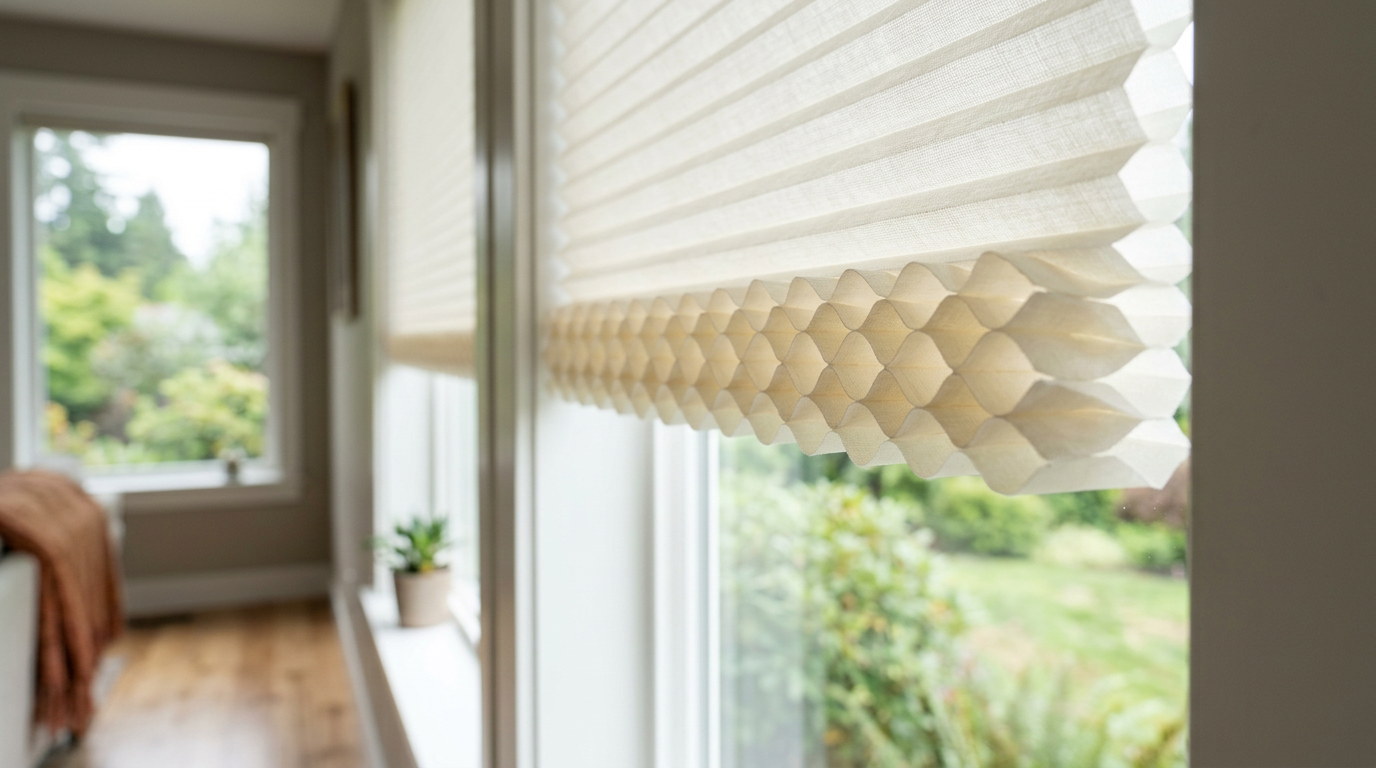
Cellular and honeycomb shades. This is the hard one, because they are also the most common energy efficient shade in Spokane homes. The cells are the whole point of the product, and they are also a trap. Soot settles down inside the honeycomb where no cloth reaches, and the fabric is a spunlace that cannot be soaked or scrubbed without destroying it. You can vacuum the outside and improve the look. The smell tends to come back on warm days, because the soot inside is still there.
If your cellular shades were in a smoke filled room, plan on replacing them. We would rather tell you that now than take your money to clean them twice.
Roman shades, sheers, and any soft fabric shade. Same reasoning. Lofted, layered fabric holds soot and holds odor. Some can be professionally cleaned, most cannot be cleaned economically, and dry cleaners are often unwilling to take them because the results are unpredictable.
Anything with a foam or fabric backing. Blackout liners and foam backed fabrics absorb odor and hold it.
A rough test that works: bring the covering into fresh air, let it warm up in sunlight for an hour, and smell it. Soot odor is heat activated. Something that smells fine in a cool room and smells like smoke in the sun still has soot in it.
The other tell is a white cloth. Wipe a hidden section. If the cloth comes back grey or yellow after the piece has already been vacuumed, the soot is in the material rather than on it.
We will come out, go room by room, and tell you which of your window coverings will clean up and which will not. There is no charge for this and no expectation that you buy anything. If everything in your house is fine, we will tell you that and leave.
If you do need to replace things, we will put together a quote matched to the window coverings you had before. Quoting for insurance claims is part of our normal work, and you can submit that quote with your claim whether or not you buy from us. If you want to upgrade instead, you pay the difference yourself.
Not always. Hard surface blinds like faux wood, vinyl, and aluminum usually clean up fine. Fabric based coverings like cellular, honeycomb, and roman shades usually do not, because soot settles inside the material where cleaning cannot reach it.
Generally no. Soot settles inside the cells and the fabric cannot be soaked or scrubbed without ruining it. Vacuuming improves the appearance but the odor usually returns on warm days. In a smoke filled room, plan on replacing them.
No. Photograph everything first and leave it as it is until your adjuster has inspected or told you in writing to proceed. Cleaning early removes the evidence your claim depends on.
Soot odor is heat activated. If a covering smells fine in a cool room and smells like smoke in afternoon sun, there is still soot inside the material. Surface cleaning does not reach it.
No. We come out, go room by room, and tell you what will clean up and what will not. There is no charge and no obligation. If everything is fine we will say so.
